Eco-friendly vapes: What they are and why they matter

Eco-friendly vapes: What they are and why they matter
Disposable vapes have a waste problem most people never see. In the UK alone, 360 million units were discarded in 2023, generating an estimated 80,000 tonnes of CO2 equivalent. That is not a rounding error. It is a full-scale environmental crisis hiding in plain sight, tucked inside colorful packaging and convenient pocket-sized devices. If you vape or sell vaping products, understanding what eco-friendly actually means in this space is no longer optional. This article cuts through the noise, defines what real sustainability looks like in vaping, and gives you practical steps to act on it today.
Table of Contents
- What does “eco-friendly” mean in vaping?
- Environmental impact: How traditional vs. eco-friendly vapes compare
- Real eco-friendly vape solutions: From design to disposal
- Practical steps for choosing and using eco-friendly vapes
- The uncomfortable truth about eco-friendly vaping
- Find greener vape options at Cloud District
- Frequently asked questions
Key Takeaways
| Point | Details |
|---|---|
| Eco-friendly means real change | A true eco-friendly vape minimizes waste and uses recyclable or modular parts. |
| Disposable vapes harm the planet | Single-use options create huge amounts of e-waste and are rarely recycled. |
| Recycling programs need support | Very few vapes are recycled today, so participation in take-back or retailer programs is essential. |
| Choose greener, use smarter | Pick reusable or responsibly designed vapes and always dispose of them properly. |
| Policy and consumer choices matter | Sustainable vaping relies on both better product design and proactive regulations. |
What does “eco-friendly” mean in vaping?
The term “eco-friendly vape” gets used loosely. Brands print it on packaging, marketers repeat it in ads, and most consumers have no framework to evaluate the claim. So let’s establish one.
A genuinely eco-friendly vape reduces harm across its entire lifecycle. That means the materials used in manufacturing, the energy required to produce it, how long it lasts before disposal, and how safely it can be recycled or broken down. No single vape checks every box perfectly, but the best options make measurable progress on several fronts at once.
Key features that define a more eco-friendly vape include:
- Removable or replaceable batteries that can be extracted and recycled separately
- Modular design so components like the pod or coil can be replaced without discarding the entire device
- Reduced use of hazardous materials including heavy metals and certain plasticizers
- Recyclable or biodegradable outer casing made from materials that do not persist in landfills for centuries
- Participation in a take-back or recycling program that ensures proper end-of-life handling
- Lower carbon footprint in production, including responsible sourcing of lithium and other minerals
Greenwashing is a real concern here. A brand that calls its product “green” because the packaging uses recycled cardboard while the device itself is sealed, non-recyclable, and lithium-heavy is not offering you a sustainable product. It is offering you a marketing story.
The recycling data makes this stark. Only 1% of single-use vapes are currently recycled. That number reflects a system-wide failure: products not designed for disassembly, consumers not given clear disposal options, and retailers not held accountable for what happens after the sale. The TRX 50K eco-friendly vape is one example of a device that takes design-level responsibility more seriously than the average disposable.
Pro Tip: When evaluating any vape’s eco-credentials, ask one question first: “Can the battery be removed?” If the answer is no, the device cannot be properly recycled regardless of what the label says.
Environmental impact: How traditional vs. eco-friendly vapes compare
A clear definition sets the stage for a direct comparison. How do these products actually affect the planet in practice?
The numbers on traditional disposables are difficult to ignore. Beyond the UK’s 80,000 tonnes of CO2 equivalent from 360 million discarded units, Scotland alone generated between 800 and 1,000 tonnes of waste from 21 to 26 million discarded vapes. Poland sees 7 to 12 tons of lithium discarded annually from vape waste. These are not abstract projections. They are documented outcomes of a product category that grew faster than any responsible waste infrastructure could handle.
“The lithium in UK disposable vapes alone is equivalent to the batteries in 22,000 electric cars. Almost none of it is being recovered.”
Compare the two product categories side by side:
| Feature | Traditional disposable | Eco-friendly alternative |
|---|---|---|
| Battery removability | Sealed, non-removable | Removable or replaceable |
| Recycling rate | ~1% | Higher with take-back programs |
| Lithium recovery | Near zero | Possible with proper infrastructure |
| Device lifespan | Single use | Multi-use with pod/coil replacement |
| Hazardous material risk | High (leaching nicotine, metals) | Reduced with safer material choices |
| CO2 footprint per puff | Higher due to full device manufacturing | Lower over device lifetime |
| Packaging waste | Often excessive | Minimized in better-designed products |
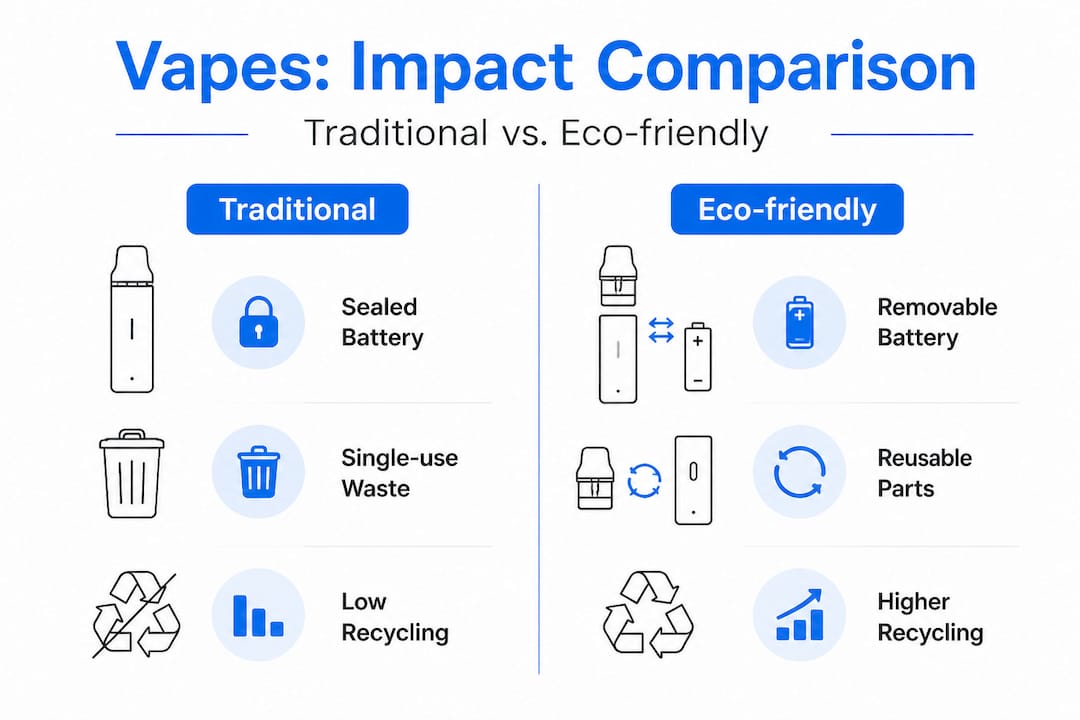
The contrast is significant. Eco-friendly designs do not eliminate environmental impact entirely, but they reduce it at multiple points in the product lifecycle. The Code Green eco-design approach, for example, prioritizes material selection and end-of-life handling from the ground up rather than treating sustainability as an afterthought.
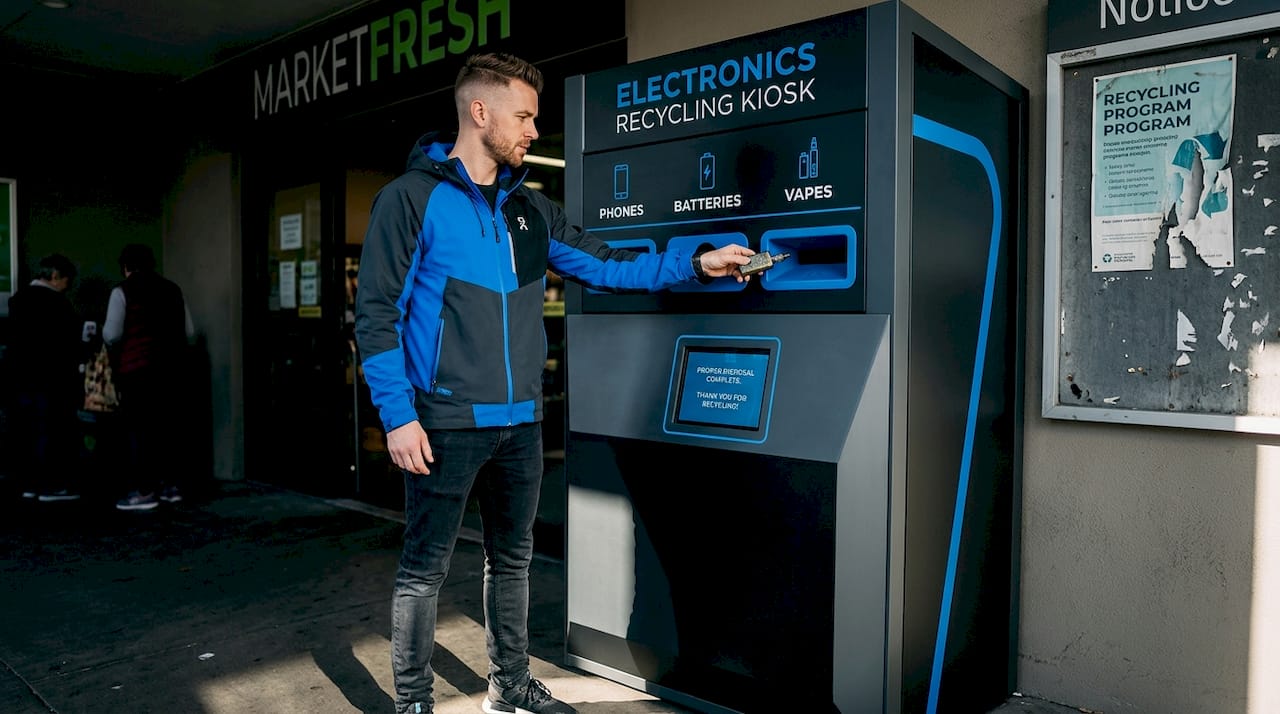
The recycling gap is the most urgent issue. When only 1% of vapes are recycled, the lithium, copper, and other recoverable materials inside them go straight to landfill or incineration. That is a resource loss on top of an environmental harm. Both problems are solvable, but not without better product design and better consumer behavior working together.
Real eco-friendly vape solutions: From design to disposal
Comparing environmental impact spotlights the urgent need for better products. What innovations and programs can actually make vaping more sustainable?
Design is the first lever. Products built with removable batteries are not just easier to recycle. They also signal that a manufacturer thought about the end of the product’s life before it left the factory. Modular devices where you replace only the pod or coil extend the life of the main unit significantly, reducing total waste per puff. Some manufacturers are also moving away from certain plastics and toward materials with lower toxicity profiles, which matters when devices inevitably end up in landfills despite best efforts.
The lithium recovery potential in discarded vapes is enormous, equivalent to 22,000 car batteries in the UK market alone. Capturing that value requires two things: policy frameworks that require manufacturers to fund recovery infrastructure, and product designs that make extraction physically feasible. Right now, most sealed disposables make battery extraction dangerous and time-consuming, which is why recyclers avoid them.
Extended Producer Responsibility (EPR) is the policy mechanism most likely to change this. EPR schemes require manufacturers to take financial and logistical responsibility for their products at end of life. Several countries are moving toward EPR requirements for vaping products, and the pressure is pushing manufacturers to rethink designs before regulations force their hand.
Existing recycling programs include:
- Call2Recycle Canada: Accepts vapes at designated drop-off points across Canada. Participation from consumers remains low, but the infrastructure exists.
- Valpak UK: Runs take-back programs for vaping products in partnership with retailers.
- ELKA take-back: Operates collection points for e-waste including vaping devices in several European markets.
- Retailer-based return programs: Some vape retailers now accept used devices at point of sale for proper disposal.
| Program | Region | Accepts vapes | Consumer participation |
|---|---|---|---|
| Call2Recycle | Canada | Yes | Low but growing |
| Valpak | UK | Yes | Moderate |
| ELKA | Europe | Yes | Low |
| Retailer take-back | Varies | Some | Very low |
The Blue Razz take-back initiative and programs like the VUE 50K recycling program represent the kind of product-level commitment to end-of-life responsibility that the industry needs more of. When you buy from a retailer that supports these programs, your purchase sends a signal about what the market values. Cloud District provides information on responsible disposal options alongside its product listings.
Pro Tip: Before you buy your next vape, search the brand name plus “recycling program” or “take-back.” If nothing comes up, that tells you something about how seriously the manufacturer takes its environmental responsibility.
Practical steps for choosing and using eco-friendly vapes
The innovations are real, but how can you take concrete steps right now for greener vaping choices?
The most important thing to understand is that individual choices matter, but they matter most when they are consistent and informed. Throwing a vape in the trash because you do not know what else to do is understandable. Doing it repeatedly after reading this article is a different situation.
Start with your purchasing checklist. Before buying any vaping product, verify:
- Battery removability: Can the battery be taken out without tools or destruction?
- Recycling program participation: Does the brand or retailer have a documented take-back or recycling option?
- Material transparency: Does the manufacturer disclose what materials are used in the device?
- Device longevity: Is this a single-use product, or can components be replaced to extend its life?
- Certifications or third-party verification: Has any independent body reviewed the eco-claims?
- Packaging waste: Is the packaging minimal and recyclable?
The disposal problem is serious. 52.9% of US young users discard vapes in regular trash, and 25.6% of discarded batteries still retain a charge above 2.5 volts. That creates real fire risk in waste facilities and toxic leaching of nicotine and heavy metals into soil and groundwater. These are not hypothetical harms. They are documented outcomes of current disposal habits.
Responsible usage habits to adopt right now:
- Never put a vape in regular household trash or recycling bins
- Store used devices in a sealed bag until you can bring them to a proper drop-off point
- Check your local electronics recycling facility, as many accept vaping devices
- Ask your vape retailer directly whether they accept returns for recycling
- Choose sustainable vapes that are designed with end-of-life handling in mind from the start
Supporting EPR locally means more than just recycling your own devices. It means asking retailers and brands what they are doing, supporting businesses that take responsibility seriously, and being willing to pay a small premium for products that do not externalize their environmental costs onto communities and ecosystems.
The uncomfortable truth about eco-friendly vaping
Here is what most sustainability conversations in the vaping space avoid saying directly: the industry is not close to being sustainable, and individual consumer choices alone will not fix that.
The lithium recovery potential equivalent to 22,000 car batteries sitting in UK landfills is a policy failure as much as a consumer behavior problem. Even if every person who read this article started recycling their vapes tomorrow, the infrastructure to process those devices at scale does not fully exist yet. Take-back programs are real but underfunded. Recycling facilities that can safely handle lithium batteries in sealed consumer devices are limited. The gap between what is possible and what is happening is enormous.
This is not a reason to give up. It is a reason to be honest about where the leverage actually is.
Real change in this space will come from EPR regulations that force manufacturers to fund proper disposal infrastructure. It will come from eco-design requirements that make removable batteries mandatory rather than optional. It will come from retailers who refuse to stock products that make no attempt at responsible end-of-life design. Consumer pressure matters, but it works best when it is directed at policy and purchasing decisions simultaneously.
What can you realistically do in the meantime? Buy from retailers who are transparent about their environmental practices. Choose devices with longer lifespans and replaceable components when those options are available. Use every take-back program you can find. And support policy changes in your region that hold manufacturers accountable. Check out CA6000 sustainable options as one example of products that make measurable design-level commitments.
The uncomfortable truth is that “eco-friendly vaping” is still more aspiration than reality for most of the market. But the direction is clear, the tools exist, and the pressure from informed consumers and regulators is growing. That is enough to work with.
Find greener vape options at Cloud District
You now have the knowledge to make more informed, responsible choices. The next step is finding products that match those values.

Cloud District carries a curated selection of vaping products that includes options designed with sustainability in mind, from devices with longer lifespans to brands participating in take-back programs. You can see all eco-friendly vapes in the catalog and filter for options that align with your priorities. The TRX 50K lower-impact design is a strong starting point for vapers who want performance without ignoring the environmental cost. Every purchase through Cloud District also earns Cloudz rewards, making it straightforward to stay loyal to brands and products that take responsibility seriously. Greener choices are available now. You just need to know where to look.
Frequently asked questions
What makes a vape eco-friendly?
An eco-friendly vape uses safer materials, removable batteries, and is designed for easy recycling or reduced waste. Lithium recovery at scale requires both design-level decisions like removable batteries and policy frameworks like EPR to be effective.
Are disposable or reusable vapes better for the environment?
Reusable vapes create much less waste than disposables, especially if they are designed for recycling and longer life. The scale of the problem is clear: 360 million discarded units in the UK in 2023 alone generated 80,000 tonnes of CO2 equivalent.
Can I recycle my vape at local stores?
Some stores and programs accept vapes for recycling, but participation is low. Recycling programs like Call2Recycle in Canada and Valpak in the UK exist, so check whether your retailer offers a return or take-back option before assuming no option is available.
What are the risks of throwing vapes in the trash?
Trashed vapes can leak toxic chemicals and cause fires due to batteries retaining charge. 52.9% of US young users discard vapes in regular trash, with 25.6% of those batteries still holding a charge above 2.5 volts, creating documented fire and contamination risks.