What Is a Draw-Activated Vape and How It Works

What Is a Draw-Activated Vape and How It Works
If you’ve ever picked up a disposable vape and just inhaled without pressing anything, you’ve already used a draw-activated vape. A draw-activated vape is a device that fires automatically when you inhale, with no button required. The technology inside detects your breath and triggers the heating element in a fraction of a second. For beginners and experienced users alike, understanding how this mechanism works changes how you choose, use, and maintain your device.
Table of Contents
- Key takeaways
- How a draw-activated vape works
- Draw-activated vs button-activated vapes
- Common issues and how to fix them
- Choosing the best draw-activated vape pen
- Best practices for daily draw-activated vaping
- My take on where draw-activated technology is heading
- Find quality draw-activated vapes at Cloud District
- FAQ
Key takeaways
| Point | Details |
|---|---|
| No button needed | Draw-activated vapes fire automatically when you inhale, using an internal airflow sensor. |
| Sensor-driven technology | A pressure or capacitance sensor detects airflow and closes the circuit to power the coil. |
| Better for beginners | Automatic activation mimics smoking behavior, making the transition simpler and more natural. |
| Maintenance matters | Oil residue and blocked airflow ports are the top causes of sensor failure and misfires. |
| Choose quality sources | Sensor quality, battery life, and safety certifications vary widely across brands and retailers. |
How a draw-activated vape works
A draw-activated vape is a buttonless device that starts producing vapor automatically when you inhale. The mechanism sounds simple on the surface, but the engineering behind it is precise.
Inside every draw-activated device sits a small airflow or pressure sensor. When you inhale, air moves through the device and causes a detectable change in pressure inside the chamber. That pressure change is picked up by the sensor, which closes an electrical circuit and sends power from the battery to the heating coil. The coil heats the e-liquid and produces vapor. The whole sequence takes less than a second.
The sensor itself operates on capacitance threshold circuits that measure changes caused by airflow to activate heating elements with precision. Many manufacturers use pulse width modulation alongside these circuits to balance sensitivity with power draw. The result is a device that responds quickly without draining the battery unnecessarily.
One of the more impressive aspects of this design is raw efficiency. Battery-powered sensors in these devices consume less than 5 microamperes of power, which is why compact disposables can pack enough battery life for thousands of puffs in a small form factor. Safety is also built into the circuit. Modern sensors include overheating protection and puff time limits, typically cutting the session off between 5 and 12.5 seconds to prevent coil damage or overuse.
Here is what the full activation sequence looks like:
- You inhale on the mouthpiece
- Air moves through the internal airflow channel
- The pressure sensor detects the change in airflow
- The sensor triggers the circuit and sends power to the coil
- The coil heats the e-liquid to produce vapor
- You exhale vapor within one second of drawing
Pro Tip: If your draw-activated vape feels sluggish to fire, the sensor port is likely partially blocked. Check the airflow inlet at the base of the device and gently clear any lint or debris before assuming the battery is dead.
Draw-activated vs button-activated vapes
Understanding the advantages of draw-activated vapes starts with understanding what you lose when a device requires a button. With button-activated models, you have to press and hold while inhaling at the same time. That coordination is second nature to experienced vapers but creates real friction for anyone switching from cigarettes or trying vaping for the first time.
Draw-activated vapes reduce user error by removing the timing variable entirely. You inhale and vapor appears. There is nothing to mistime and no button to forget to hold. For people moving away from smoking, this matters more than most vape guides acknowledge. The physical act of smoking is automatic. A draw-activated device replicates that automaticity in a way that closely mimics traditional smoking behavior, which lowers the cognitive barrier to switching.
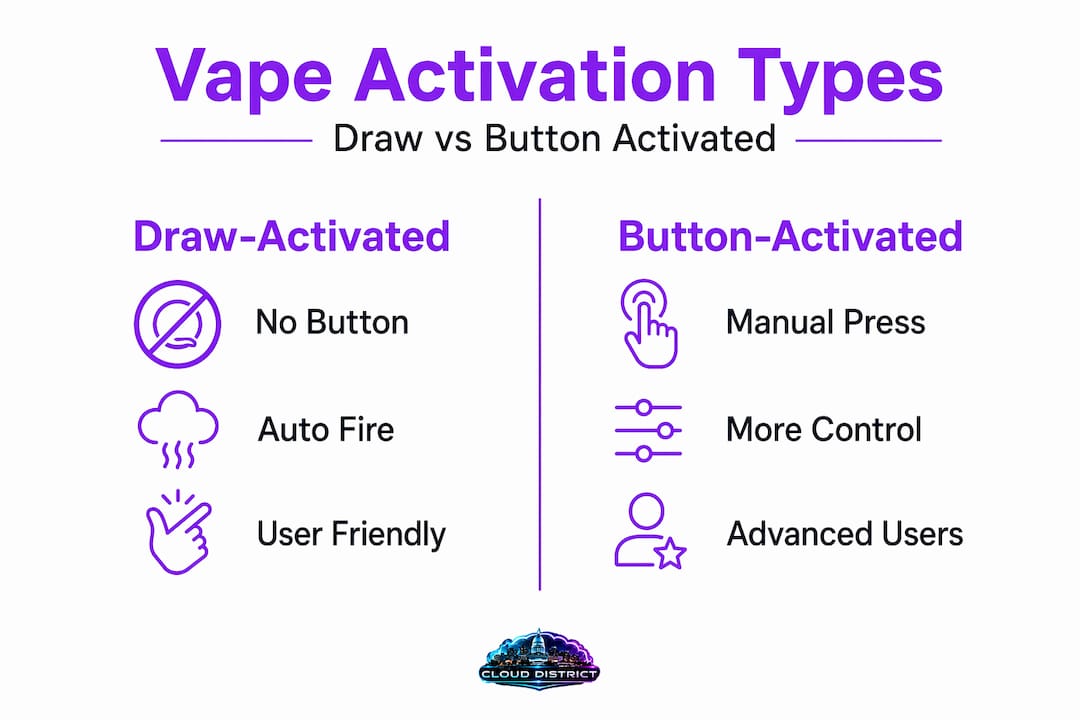
Here is a direct comparison of the two activation methods:
| Feature | Draw-activated | Button-activated |
|---|---|---|
| Ease of use | Very easy, no coordination needed | Requires press-and-inhale timing |
| Beginner-friendly | Yes | Less so |
| Customization | Limited | Higher, with variable wattage options |
| Misfire risk | Low (good sensors) | Low (physical button) |
| Battery efficiency | High (sensor draws minimal power) | Moderate |
| Design complexity | Simple, fewer moving parts | More complex |
| Best for | Casual users, beginners, disposables | Advanced users, mods |
Button-activated devices do have one real advantage: precise control. If you want variable wattage or temperature settings, you need a button-based mod. But for the majority of people who want a simple, reliable device that just works, draw-activation is the more practical choice. The most disposable vapes use draw-activation for exactly this reason: convenience and ease are the top priorities in that category.
Also worth knowing: draw-activated devices go by several names, including auto-draw, airflow activated, buttonless, sensor activated, and inhale activated. They all describe the same core technology.
Common issues and how to fix them
Even well-made draw-activated devices encounter problems. Most issues trace back to the sensor or the airflow pathway, not the battery or coil.
-
Device fails to activate. The most frequent cause is a blocked airflow inlet. Check the small hole or channel at the base of the device where air enters. Even a thin film of pocket lint can reduce airflow below the sensor’s detection threshold.
-
Device fires without inhaling. This is called a misfire or false trigger. It usually happens when moisture or condensation gets into the sensor chamber. Storing your device upright and keeping it away from humid environments reduces this significantly.
-
Weak or inconsistent vapor production. If the device activates but vapor output is reduced, oil residue on the sensor is often the cause. Residue builds up over time and dulls sensor sensitivity.
-
Device cuts out mid-draw. This is typically the built-in puff limiter engaging. Drawing too long triggers the protective shutoff to prevent coil damage. Shorter, steady draws fix this immediately.
-
Battery dies faster than expected. If the device feels warm between uses, a misfire may be keeping the circuit partially active. Inspect the airflow channel and check for visible blockages.
For cleaning, use a dry cotton swab to gently clear the airflow channel and the area around the sensor port. Do not use water or alcohol directly on the sensor. If you use a refillable pod device, a quick dry wipe of the pod connection point after each refill prevents residue buildup at the source.
Pro Tip: Store draw-activated devices in a clean, dry case or pouch rather than loose in your pocket or bag. Lint and debris are the most preventable causes of sensor degradation, and a simple case eliminates both.
Choosing the best draw-activated vape pen
Not all draw-activated vapes are equal. The sensor quality, battery capacity, and build tolerances vary significantly across price points and brands. Here is what actually matters when you are selecting a device.
Sensor responsiveness. A quality sensor fires within 0.3 seconds of your inhale. If a device lags noticeably, the sensor is either poorly calibrated or already degraded. Test the draw response before committing to a brand.
Battery capacity relative to puff count. Advertised puff counts assume average draw duration. If you take longer draws, your actual count will be lower. Look for devices with transparent specs on battery mAh alongside puff estimates.
Pod or cartridge compatibility. For refillable systems, check that replacement pods are widely available and not proprietary to a single retailer. Limited pod availability is a common frustration with budget draw-activated systems. You can review rechargeable vape options for guidance on compatible systems worth considering.
Safety certifications. Reputable devices carry certifications confirming the coil materials, e-liquid contact surfaces, and battery components meet regulatory standards. This matters most when buying online from unfamiliar sources.
Flavor options and e-liquid quality. The best hardware means little if the e-liquid underdelivers. Popular draw-activated disposables like the Geek Bar Pulse X and Geek Bar RIA are well regarded for consistent flavor delivery alongside reliable auto-draw performance.
Buying from a verified retailer matters. Counterfeit vapes with substandard sensors and unregulated e-liquids are common in unverified channels. A trusted source like Cloud District ensures the products are authentic and meet quality standards.
Best practices for daily draw-activated vaping
Knowing how to use a draw-activated vape correctly extends its life and improves your experience. A few consistent habits make a measurable difference.
- Take slow, steady draws rather than sharp or forceful inhales. Aggressive inhaling can flood the coil with e-liquid, causing gurgling or spitback.
- Avoid covering the airflow inlet with your fingers when inhaling. This is more common than people realize and blocks the pressure change the sensor needs to detect.
- Charge the device before the battery reaches critically low levels. Deep discharge cycles reduce lithium battery lifespan faster than partial charges.
- Keep the device away from direct sunlight and heat sources. High temperatures affect both battery performance and e-liquid viscosity, which can clog wicking material.
- Replace pods or cartridges when vapor flavor turns noticeably harsh or muted. A burnt taste means the wick is dry and continuing to vape risks damaging the coil permanently.
Pro Tip: If you are not using your device for more than a few days, store it at around 50% battery charge. Full charge storage accelerates lithium battery degradation faster than most people expect.
My take on where draw-activated technology is heading
I’ve spent years watching vape technology shift from clunky mods with five-click startup sequences to sleek disposables you just breathe into. The move to draw-activation was not just a convenience upgrade. It fundamentally changed who could realistically use these devices.
What I find most interesting is how the sensor technology has quietly become the quality differentiator in a crowded market. A year ago, many budget disposables had sensors that lagged or misfired regularly. Now the gap between entry-level and premium draw-activation is narrowing. Manufacturers are investing in tighter airflow tolerances and lower-threshold sensors, and users are noticing the difference.
My honest assessment: if you are still using a button-activated device out of habit rather than by deliberate preference for the control it offers, it is worth trying a quality draw-activated pen. The advantages of vape pens without button friction are real, particularly for anyone who was a cigarette smoker. The instinctive draw mirrors exactly what you already know.
Where I see the next wave: sensors with adaptive thresholds that learn your draw style over time and adjust sensitivity automatically. That would eliminate the one remaining complaint about auto-draw devices, which is inconsistent response across different users. It is coming. The component cost is already dropping.
— Justin
Find quality draw-activated vapes at Cloud District

Cloud District carries a curated selection of draw-activated disposable vapes from trusted brands, including popular Geek Bar models built with reliable auto-draw sensors and premium e-liquid formulations. Every product on the platform is verified for authenticity and meets regulatory standards for legal-age consumers.
Whether you are exploring your first draw-activated device or looking to upgrade to a higher-capacity option, you can browse the full selection at Cloud District. The platform also includes a rewards system that earns you Cloudz points on every purchase, along with exclusive deals on top-selling flavors and models. All products are available for convenient local pickup.
FAQ
What is a draw-activated vape?
A draw-activated vape is a buttonless vaping device that activates automatically when you inhale. An internal airflow or pressure sensor detects your breath and triggers the battery to power the heating coil, producing vapor with no button press required.
How does the sensor in a draw-activated vape work?
The sensor measures pressure or capacitance changes caused by airflow through the device. When you inhale, that change crosses a set threshold, which closes the electrical circuit and sends current to the coil. The process takes less than a second.
What causes a draw-activated vape to stop firing?
The most common causes are a blocked airflow inlet, oil residue on the sensor, or a depleted battery. Clearing the airflow channel with a dry cotton swab and checking the battery level resolves most activation failures.
Are draw-activated vapes better than button-activated ones?
Draw-activated vapes are generally better for beginners and casual users because they eliminate button timing and mimic smoking naturally. Button-activated devices offer more control for advanced users who want variable wattage or temperature settings.
How long do draw-activated vape sensors last?
In a well-maintained device, the sensor should last the full life of the device. Regular cleaning of the airflow channel and avoiding moisture exposure are the two most effective ways to preserve sensor function over time.
Recommended
- Disposable vapes explained: How they work and why they’re popular | Cloud District
- Rechargeable vapes: Benefits, options, and how they work | Cloud District
- Discover the top advantages of using vape pens over smoking | Cloud District
- How nicotine works in disposable vapes like Geek Bar | Cloud District