What Is Closed System Vaping? A Clear 2026 Guide

What Is Closed System Vaping? A Clear 2026 Guide
Closed system vaping is a method where a device uses pre-filled, sealed pods containing both e-liquid and an integrated coil, designed to be replaced rather than refilled. The industry term for these devices is “closed pod systems,” and they represent one of the two main categories of pod vapes alongside open systems. Brands like Vuse and Geek Bar have built their product lines around this format, making it one of the most widely used vaping setups available. If you are researching vaping options and want to understand what is closed system vaping before you buy, this guide covers the mechanics, benefits, trade-offs, and how closed systems compare to open alternatives.
What is closed system vaping and how does it work?
A closed system vape consists of two core components: a rechargeable battery unit and a sealed pod. The pod contains e-liquid and coil, both factory-assembled and sealed before it reaches you. You cannot open the pod, add liquid, or swap the coil. When the e-liquid runs out, you discard the pod and snap in a new one.

Most closed system devices are draw-activated. That means you simply inhale and the device fires automatically. There are no buttons to press, no wattage settings to adjust, and no tanks to fill. Many models feature minimal controls such as an airflow slider or an LED battery indicator, but the interaction stays simple by design.
The use cycle follows three steps:
- Insert the pod into the battery unit until it clicks into place
- Inhale through the mouthpiece to activate vapor production
- Replace the pod when vapor production weakens or flavor fades
Pro Tip: Watch for a change in flavor quality rather than waiting for the device to stop producing vapor entirely. A burnt or muted taste is the clearest sign a pod is spent.
The sealed design is what separates closed pod systems from open systems. Open systems use refillable pods or tanks where you pour in your own e-liquid. Closed systems remove that step entirely, which is the source of both their main appeal and their main limitations.
What are the benefits of closed system vaping?
Closed system vaping suits users who want a consistent, low-effort experience. The advantages are concrete and practical, not just marketing language.
No mess, no spills. Pre-filled pods prevent e-liquid handling entirely. You never pour liquid into a tank, which eliminates the spills and sticky residue that come with manual refilling. This matters if you vape on the go or keep your device in a bag or pocket.
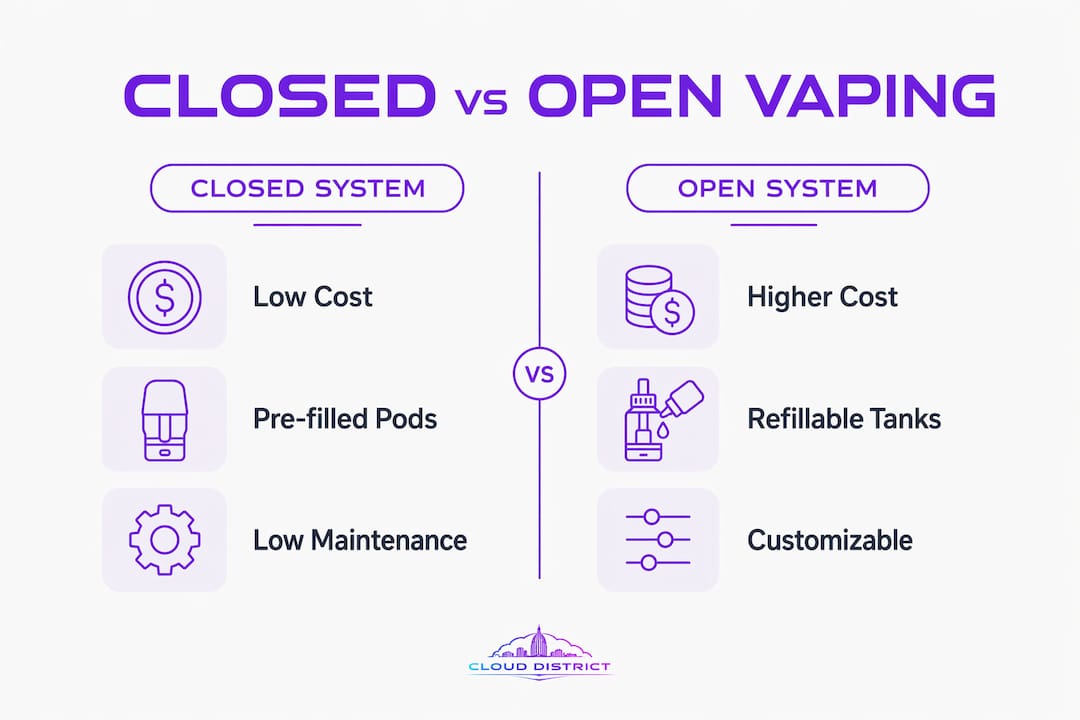
Zero maintenance. Closed systems eliminate coil replacement and tank cleaning, two tasks that require regular attention with open systems. You do not need to prime coils, clean connections, or monitor wicking material. The pod handles all of that, and you discard it when it is done.
Consistent performance. Because pods are factory-sealed and quality-controlled, each one delivers the same draw resistance, vapor output, and flavor profile. You are not guessing whether you filled the tank correctly or installed the coil at the right resistance.
Compact and portable. Closed pod devices are typically slim and lightweight. They fit in a shirt pocket without the bulk of a box mod or the fragility of a glass tank.
The core appeal is clear: simple design and no refilling requirements make closed systems the preferred choice for beginners and for experienced users who want low upkeep. If you have ever dealt with a leaking tank or a burnt coil at the wrong moment, the appeal of a sealed pod becomes obvious.
What are the limitations of closed system vapes?
Closed systems trade flexibility for convenience. The trade-offs are real and worth understanding before you commit to a device.
Restricted flavor and nicotine options. Users are limited to specific flavor profiles and nicotine strengths from the manufacturer’s pod lineup. You cannot mix flavors, adjust nicotine concentration, or try a formulation the brand does not offer. If your preferred flavor gets discontinued, your options narrow immediately.
Higher long-term costs. Closed systems carry lower initial device costs but higher ongoing expenses. Pre-filled pods cost more per milliliter of e-liquid than buying bottled e-liquid for a refillable device. Refillable e-liquid can reduce costs by about 70% compared to purchasing pre-filled pods over time. That gap compounds quickly for daily users.
Pod availability risk. If your brand’s pods are out of stock, the device is unusable until replacements arrive. Open system users can pick up any compatible e-liquid from almost any vape shop. Closed system users are locked into a specific supply chain.
Environmental impact. Each spent pod is a piece of plastic and metal waste. Heavy users go through pods frequently, and the cumulative waste adds up in a way that refillable systems do not.
| Factor | Closed system | Open system |
|---|---|---|
| Initial device cost | Lower | Moderate to higher |
| Ongoing cost | Higher (pre-filled pods) | Lower (bottled e-liquid) |
| Flavor variety | Limited to brand’s lineup | Broad, user-selected |
| Maintenance required | None | Coil changes, tank cleaning |
| Portability | High | Moderate |
| Environmental waste | Higher (disposable pods) | Lower (reusable tank) |
Pro Tip: If you travel frequently or rely on a single brand’s pods, check local availability before committing to a closed system device. Running out of pods with no local stock is a real inconvenience that open system users rarely face.
Closed system vs. open system vaping: which fits your needs?
Understanding what is open system vaping clarifies exactly what closed systems give up in exchange for simplicity. Open systems use refillable pods or tanks. You choose your own e-liquid, select your nicotine strength, and replace only the coil when it wears out. The device itself lasts much longer, and the cost per puff drops significantly over time.
Open systems require refilling, coil replacement, and allow greater flavor and nicotine control. That flexibility is the point for experienced users who want to fine-tune their experience. For someone new to vaping or someone who simply wants a device that works without thinking about it, that same flexibility becomes a burden.
The right system depends on your priorities:
- Choose a closed system if you want zero maintenance, consistent performance, and a compact device you can use anywhere without preparation
- Choose an open system if you want lower long-term costs, broader flavor access, and the ability to customize nicotine levels and vapor output
- Consider trying both before committing to one format, since the hands-on difference between a sealed pod and a refillable tank is more significant than it reads on paper
The cost difference is the factor most users underestimate. Pre-filled pods are priced for convenience. If you vape daily, the savings from refillable e-liquid add up to a meaningful amount over months. Closed system users pay a premium for the simplicity, and that is a fair trade for the right person. It is not a fair trade for someone who vapes heavily and wants to manage costs.
Geek Bar and Vuse represent the closed system category well in the current market. Both offer a range of pod flavors, consistent hardware, and wide retail availability. They are good reference points if you want to compare the closed pod experience against an open system device side by side.
Key takeaways
Closed system vaping delivers consistent, maintenance-free performance through sealed pre-filled pods, but users pay more over time and accept limited flavor and nicotine options in exchange.
| Point | Details |
|---|---|
| Sealed pod design | Each pod contains e-liquid and a coil; replace it when empty, never refill it. |
| Zero maintenance | No coil changes or tank cleaning required, making it ideal for beginners. |
| Higher ongoing cost | Pre-filled pods cost significantly more per use than bottled e-liquid for open systems. |
| Limited customization | Flavor and nicotine options are restricted to what the manufacturer offers. |
| Pod availability risk | If your brand’s pods are out of stock, the device cannot be used until restocked. |
My honest read on closed systems after years in the vape space
The closed system debate gets oversimplified constantly. People frame it as “easy but expensive” versus “complex but cheap,” and that framing misses the real decision.
The biggest thing beginners overlook is the supply dependency. When you buy a closed system device, you are not just buying hardware. You are committing to a specific manufacturer’s pod ecosystem. If that brand pulls a flavor, raises pod prices, or faces a supply disruption, your options shrink immediately. That is a real constraint that does not show up in any product description.
The cost gap is also more significant than most new users expect. The 70% cost reduction from switching to refillable e-liquid is not a marginal difference. For a daily user, that gap represents a substantial amount over a year. Closed systems are priced for convenience, and that convenience has a real dollar value attached to it.
That said, I think closed systems are genuinely the right choice for a specific type of user: someone who wants a device that works every time without any preparation, maintenance, or learning curve. If that describes you, the premium is worth paying. If you are willing to spend ten minutes learning how to fill a pod and change a coil, an open system will serve you better long-term.
My advice: try a closed system first if you are new to vaping. Get comfortable with the format. Then evaluate whether the limitations bother you enough to switch. Most users know within a few weeks whether they want more control or whether the simplicity is exactly what they needed.
— Justin
Find your next closed system pod at Cloud District

Cloud District carries a curated selection of closed system pod products built for users who want quality and convenience in one place. The Pulse Strawberry Kiwi Thermal Edition is a strong starting point if you want a pre-filled pod with a clean, consistent flavor profile. Cloud District also stocks the RIA Sour Strawberry Dragon for users who prefer a bolder taste. Every purchase earns Cloudz rewards, and the platform is built for fast local pickup so you are never waiting long for your next pod. Browse the full selection at Cloud District and find the right closed system option for your needs.
FAQ
What is a closed system vape?
A closed system vape is a pod-based device that uses pre-filled, sealed pods containing e-liquid and an integrated coil. The pod is replaced when empty and cannot be refilled by the user.
Are closed systems better for beginners?
Closed systems are the most beginner-friendly vaping format because they require no refilling, coil changes, or technical setup. You insert a pod and inhale.
Why are closed system pods more expensive long-term?
Pre-filled pods cost more per milliliter of e-liquid than bottled e-liquid used in open systems. Switching to a refillable device can reduce ongoing costs by around 70% over time.
What happens if my closed system pods are out of stock?
If your specific brand’s pods are unavailable, the device cannot be used until replacements arrive. This supply dependency is a key risk that open system users do not face.
What is the difference between closed and open system vaping?
Closed systems use sealed, pre-filled pods that are discarded after use. Open systems use refillable pods or tanks where users add their own e-liquid, offering more flavor choice and lower ongoing costs.