Why Avoid Counterfeit Vapes: Health and Safety Facts

Why Avoid Counterfeit Vapes: Health and Safety Facts
Counterfeit vapes are everywhere, and most users cannot tell the difference. The problem goes far beyond a knockoff label or a cheaper price point. These products carry real, documented risks: toxic chemicals, mislabeled nicotine concentrations, faulty batteries, and zero regulatory oversight. Understanding why avoid counterfeit vapes is not a theoretical exercise. It is a practical matter of protecting your health and staying on the right side of the law. This guide covers the specific dangers, the legal stakes, and the exact steps you can take to verify what you are actually buying.
Table of Contents
- Key Takeaways
- Health risks of counterfeit vapes
- Legal and regulatory implications in 2026
- How to identify authentic vs counterfeit vapes
- Risks of “nicotine-free” counterfeit vapes
- Practical steps to avoid counterfeit products
- My honest take on counterfeit vape risks
- Find verified vapes at Cloud District
- FAQ
Key Takeaways
| Point | Details |
|---|---|
| Toxic chemical exposure | Counterfeit vapes contain heavy metals and harmful compounds at levels far above regulated products. |
| Mislabeled nicotine levels | Nicotine concentrations in fake vapes can deviate by up to 30%, making safe dosing impossible. |
| Real legal consequences | Possessing or distributing counterfeit vapes can result in enforcement action under FDA regulations. |
| Spot fakes before you buy | Check packaging quality, nicotine warnings, QR codes, and the legitimacy of your purchase source. |
| Authentic sources matter | Buying from licensed retailers is the most reliable way to avoid counterfeit products entirely. |
Health risks of counterfeit vapes
The dangers of counterfeit vapes are not speculative. They show up in lab data, emergency rooms, and legal briefs. Counterfeit and low-quality devices expose users to a category of harm that regulated products are specifically designed to prevent.
Research published in PLOS One found that homemade or low-quality e-liquids produce significantly higher concentrations of chromium and aluminum in aerosol, driven by thermal coil degradation under partial tank conditions. Those are not trace amounts. Chromium and aluminum inhalation is linked to lung damage and systemic toxicity. Counterfeit devices, which use substandard coil materials and uncontrolled manufacturing, replicate these exact conditions at scale.
The nicotine problem is just as serious. A 2026 study found that nicotine concentration deviations in mislabeled e-cigarette liquids can reach up to 30%, with PG/VG ratio inaccuracies at similar margins. That level of variance means you cannot estimate your actual nicotine intake. For someone managing nicotine dependency, that is not an inconvenience. It is a direct path to overconsumption or accidental withdrawal.
The physical device risks are equally documented. In 2026, the North Carolina Attorney General’s office filed a brief highlighting a case where a counterfeit vape battery explosion caused severe injuries to a consumer. Battery management systems in authentic devices exist precisely to prevent this. Counterfeit products regularly skip these protections entirely.
Key health issues with counterfeit vapes include:
- Heavy metals in aerosol from degraded coils, including chromium, aluminum, and lead
- Mislabeled nicotine concentrations leading to uncontrolled intake
- Carrier liquids like propylene glycol breaking down into carcinogens when overheated
- No battery protection circuitry, creating explosion and burn risks
- Unknown flavorings and additives with no safety testing
“Carrier liquids including propylene glycol can break down into carcinogens at elevated temperatures, and counterfeit products increase this exposure uncertainty due to unknown ingredient compositions.” — Cleveland Clinic
Pro Tip: You cannot detect counterfeit vape exposure by taste or function alone. Research confirms that aerosol emission variability depends on device condition and liquid composition in ways that are not perceptible during normal use.
Legal and regulatory implications in 2026
The regulatory situation around counterfeit vapes has become more defined, not less. The FDA has made enforcement against unauthorized and counterfeit ENDS products a stated priority, and the legal exposure for consumers, sellers, and distributors has increased accordingly.
The FDA’s enforcement guidance focuses specifically on products lacking premarket authorization, which includes the majority of counterfeit vapes currently on the market. No counterfeit product has gone through the Premarket Tobacco Product Application process. None have submitted safety data. They enter the supply chain illegally and carry that legal status all the way to the end user.
The enforcement scope is broader than most people realize. Consider these regulatory priorities currently in effect:
- Targeting flavored disposable products that lack authorization and appeal to youth
- Removing counterfeit and illegal imports from the commercial market
- Pursuing distributors and retailers who supply unauthorized products
- Addressing consumer safety harms from defective unauthorized devices
- Coordinating with state attorneys general on high-profile enforcement cases
“FDA treats counterfeit and unauthorized vape products as both a safety risk and an illegal market problem requiring active enforcement.” — FDA Enforcement Priorities Guidance
The North Carolina battery explosion case illustrates how this plays out legally. The injured consumer’s case reached the state Supreme Court level, demonstrating that counterfeit vape liability extends well beyond a simple product refund. Legal actions involving counterfeit products can implicate product liability law, criminal statutes, and FDA regulatory violations simultaneously. Staying informed about vaping compliance requirements is a practical step every user should take.
How to identify authentic vs counterfeit vapes
Knowing how to identify counterfeit vapes comes down to a set of observable, checkable signals. None of them require lab equipment. Most require about 60 seconds of attention before you buy.
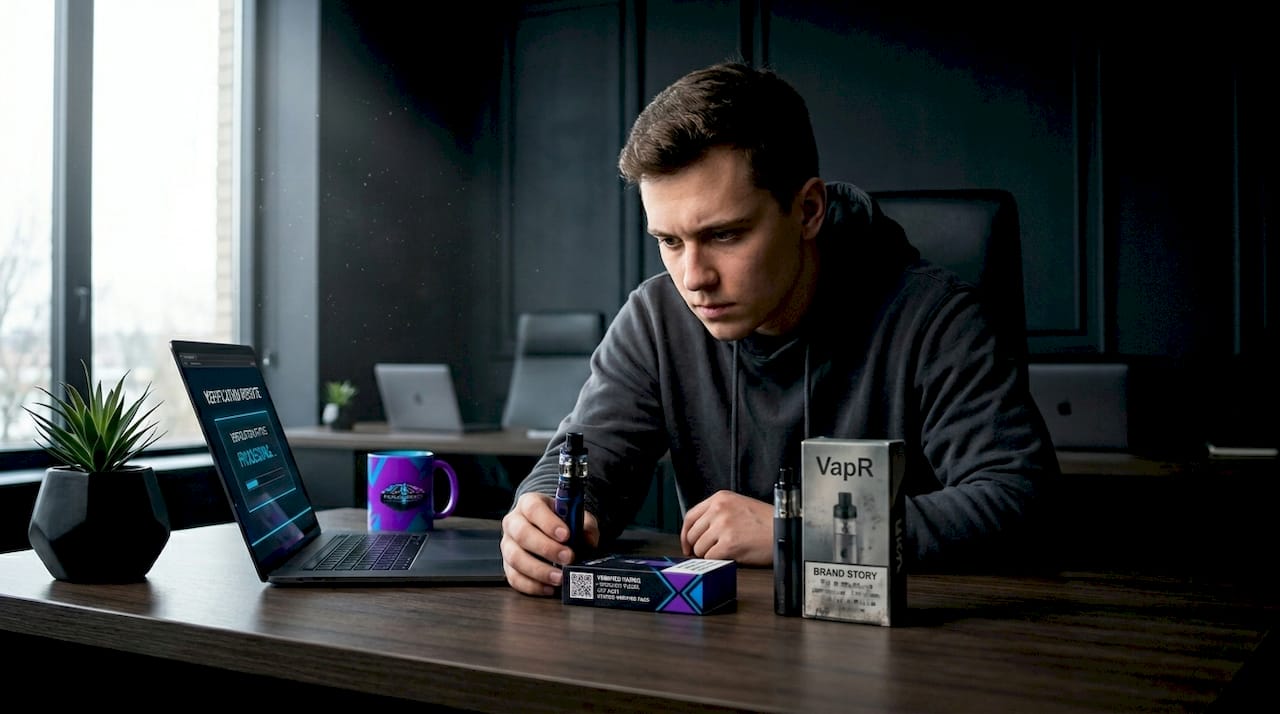
The Guardian’s reporting on counterfeit identification confirms that poor packaging and missing warnings are the most consistent markers of a fake vape. Legally compliant products sold in the United States are required to carry specific nicotine health warnings and ingredient disclosures. If those are absent, faded, or printed with obvious errors, that is a direct indicator.
| Feature | Authentic product | Counterfeit product |
|---|---|---|
| Nicotine warning label | Clear, legally required wording, prominently placed | Missing, faded, or incorrectly formatted |
| Ingredient list | Full disclosure on packaging | Absent or vague |
| QR code / verification | Functional, links to manufacturer portal | Missing, non-functional, or links to generic page |
| Build quality | Consistent finish, tight assembly | Loose parts, uneven seams, inconsistent branding |
| Price point | Consistent with MSRP at licensed retailers | Significantly below market rate |
| Purchase source | Licensed retailer, authorized reseller | Unlicensed vendor, online marketplace, street sale |
Ways to spot fake vapes before purchase:
- Check the packaging for required FDA nicotine health warnings. Real products include specific warning text.
- Look for a manufacturer QR code and scan it. Legitimate brands direct you to a verification page or official product listing.
- Compare the product against the manufacturer’s official images. Font, logo placement, and color should match exactly.
- Verify the price against multiple authorized retailers. Significant discounts are a warning sign, not a deal.
- Buy only from licensed vendors with physical accountability.
Pro Tip: Learning how to check vape authenticity takes less than two minutes per product. The manufacturer’s verification portal or official retailer confirmation is the fastest way to confirm you have a genuine device.
Risks of “nicotine-free” counterfeit vapes
Many users assume that nicotine-free vapes carry minimal risk. Counterfeit products expose a serious flaw in that assumption.
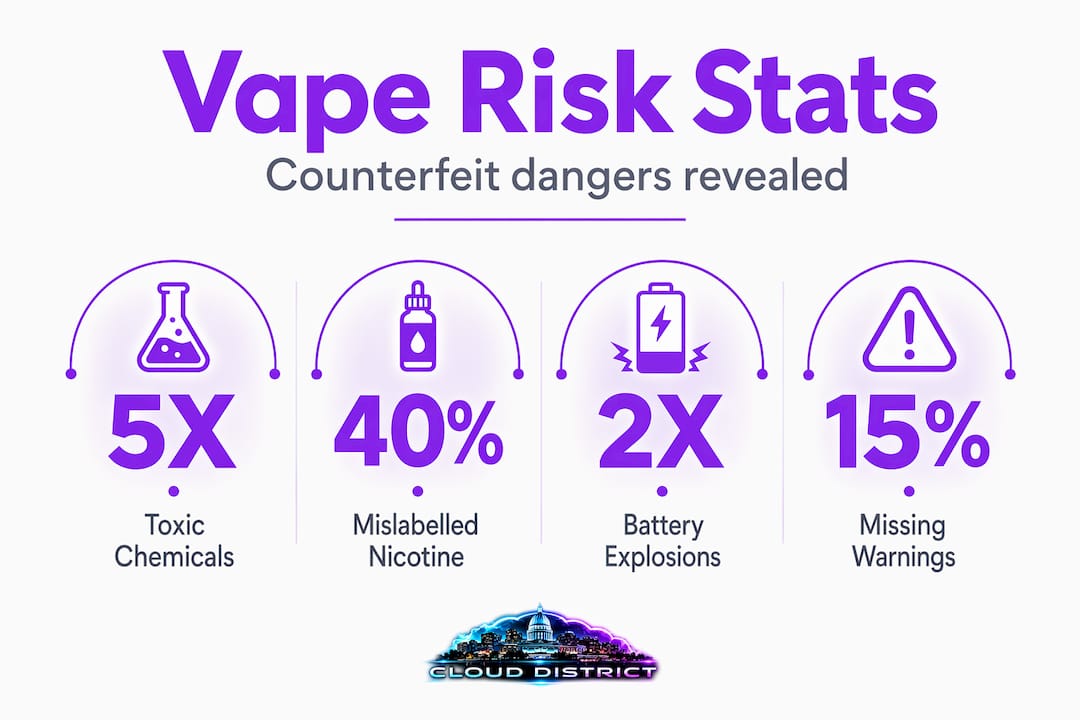
Even in regulated products, the Cleveland Clinic notes that carrier liquids can decompose into harmful volatile organic compounds when heated. Propylene glycol and vegetable glycerin, the primary carriers in most e-liquids, produce compounds including formaldehyde and acetaldehyde under certain temperature conditions. That is in tested, formulated products. Counterfeit nicotine-free vapes use unknown carrier compositions with no temperature or chemical testing.
The mislabeling risk compounds this. Research confirms that nicotine dose inaccuracies in counterfeit liquids mean a product labeled as nicotine-free may contain meaningful nicotine concentrations. For adolescents or pregnant users, that kind of undetected exposure carries serious consequences for neurological development and fetal health.
“Health risks of vaping are present even in regulated products, with counterfeits amplifying uncertainty substantially due to unknown ingredients and manufacturing conditions.” — Cleveland Clinic
Additional risks specific to counterfeit nicotine-free products:
- Unregulated flavorings that have not been evaluated for inhalation safety
- Contamination from manufacturing environments with no quality controls
- No expiration data, meaning degraded compounds are inhaled without user awareness
- Higher concentrations of trace metals from substandard coil materials
Understanding vape product expiration and how degraded ingredients increase exposure risk is a straightforward way to protect yourself from some of these issues.
Practical steps to avoid counterfeit products
Safe vaping practices come down to a short list of consistent behaviors. None of them are complicated. All of them are worth following.
- Buy from licensed retailers only. Authorized sellers are legally accountable for the products they stock. That accountability filters out counterfeits at the supply chain level.
- Verify the product before opening it. Use the QR code, check the packaging against official product images, and confirm the nicotine warning language is present and correct.
- Check expiration and batch information. Authentic products include batch codes and expiration dates. Their absence is a red flag.
- Report suspected counterfeits. The FDA accepts reports through MedWatch. State attorneys general offices are also active in this space. Reporting matters.
- Prioritize authenticity over price. A 30% discount on an unfamiliar platform is not a deal. It is the cost of unknown chemical exposure.
- Stay current on enforcement news. The counterfeit vape market changes quickly. Knowing which products are being flagged gives you an early warning system.
Pro Tip: If you are unsure whether a product is genuine, the safest move is to walk away. Authenticated local vape purchases from licensed vendors take the guesswork out entirely.
My honest take on counterfeit vape risks
I have spent a significant amount of time reviewing research on vaping safety, and one pattern stands out to me consistently: the gap between how users perceive counterfeit risk and what the data actually shows.
Most people I talk to think a fake vape is just a cheaper version of the real thing. The brand is wrong, maybe the flavor is slightly off, but functionally it is the same device doing the same thing. The research dismantles that assumption completely. The 30% nicotine deviation finding from the 2026 MDPI study is not a minor discrepancy. It means the product you think you are controlling is actively working against that control.
What I find more unsettling is the metal exposure angle. Chromium and aluminum in aerosol are not vaping side effects. They are manufacturing defects. Regulated products are designed to keep coil degradation within safe limits. Counterfeit products are not designed at all. They are assembled with no accountability to any standard.
The legal picture reinforces this. The FDA is not treating counterfeit vapes as a minor compliance issue. It is treating them as an illegal market problem with real enforcement consequences. That framing matters for users, not just distributors.
My practical recommendation is simple: the price difference between an authentic product and a counterfeit is never worth what you are trading for it. Knowing how to identify authentic vapes is a skill that pays for itself immediately.
— Justin
Find verified vapes at Cloud District
Avoiding counterfeit vapes starts with buying from a source you can trust. Cloud District carries a curated selection of authenticated disposable vapes from verified brands, so you never have to guess about what you are getting.

Every product on the Cloud District platform comes from verified brand sources, with full packaging and labeling compliance. You can browse popular options including the Pulse Strawberry Kiwi Thermal Edition, explore the full verified brand catalog, or use the built-in rewards program to earn Cloudz on every purchase. Safe purchasing decisions start with knowing your retailer. Cloud District makes that straightforward.
FAQ
What makes counterfeit vapes dangerous to your health?
Counterfeit vapes contain unregulated chemicals, mislabeled nicotine concentrations, and substandard coil materials that release heavy metals including chromium and aluminum into aerosol. Device safety failures, including battery explosions, add a physical injury risk on top of the chemical exposure.
How do you identify a counterfeit vape?
Check for required nicotine health warning labels, a functional manufacturer QR code, consistent build quality, and purchase the product from a licensed retailer. Missing or incorrect labeling is the most consistent sign of a fake, according to reporting on counterfeit identification.
Are nicotine-free counterfeit vapes safe?
No. Even regulated nicotine-free vapes carry inhalation risks from carrier liquid decomposition. Counterfeit versions add unknown additives, no quality controls, and the possibility that the product actually contains nicotine despite the label.
Is it illegal to buy or use a counterfeit vape?
Counterfeit vapes lack FDA premarket authorization, making them illegal products under federal law. While enforcement has primarily targeted distributors and retailers, FDA enforcement priorities make the legal status of these products clear for all parties in the supply chain.
Why are real vapes better than counterfeits?
Authentic vapes are manufactured to regulatory standards, with tested formulations, accurate labeling, battery protection systems, and verifiable ingredients. Counterfeits skip all of those safeguards. Why real vapes are better is not a matter of brand loyalty. It is a matter of knowing what you are actually inhaling.