Eco-Friendly Vaping Tips to Cut Your Carbon Footprint

Eco-Friendly Vaping Tips to Cut Your Carbon Footprint
If you vape regularly, the waste adds up faster than most people realize. Disposable devices pile up, lithium batteries end up in the trash, and plastic packaging multiplies with every purchase. Adopting eco-friendly vaping tips does not mean giving up the experience you enjoy. It means making smarter choices about the devices you use, how you charge them, and what you do with them when they’re done. This guide gives you ten specific, practical ways to vape with less environmental impact starting today.
Table of Contents
- Key takeaways
- 1. Follow the core eco-friendly vaping tips by switching to reusable devices
- 2. Dispose of vape devices the right way
- 3. Select eco-conscious vape products and suppliers
- 4. Understand why disposables are a systemic problem
- 5. Build energy-efficient charging habits
- 6. Minimize plastic waste and prevent e-liquid contamination
- 7. Support brands with take-back and recycling programs
- 8. Vaping device comparison by environmental impact
- 9. Buy from retailers that reward responsible choices
- 10. Stay informed and keep raising the standard
- My honest take on where sustainable vaping actually stands
- Find eco-conscious vaping products at Clouddistrict
- FAQ
Key takeaways
| Point | Details |
|---|---|
| Switch to refillable devices | Refillable pods cut carbon footprint by 60–80% compared to disposables over one year. |
| Dispose of devices correctly | Tape battery terminals and use e-waste bins or take-back programs, never household trash. |
| Buy eco-conscious brands | Choose suppliers with recyclable packaging, bulk options, and carbon-offset shipping to lower per-unit waste. |
| Maintain your device | Keeping devices clean and avoiding overcharging extends lifespan and reduces how often you replace them. |
| Minimize plastic and contamination | Seal used pods and e-liquid bottles before disposal to prevent nicotine from entering soil and water. |
1. Follow the core eco-friendly vaping tips by switching to reusable devices
The single biggest change you can make is moving away from disposables. Disposables weigh 30 to 40 grams each, while replacement pods for refillable systems weigh just 6 to 8 grams. That is a 75 to 80 percent reduction in discarded material per session, and it adds up to a 60 to 80 percent carbon footprint reduction over twelve months.
Modern refillable pod systems have also closed the convenience gap. Today’s best options are draw-activated and leak-resistant, meaning you get the same ease of use without the constant waste. A quality refillable device lasts years with proper care, compared to a disposable designed to last three to five days before going straight into the trash.
- Look for pod systems with regulated battery protection built in
- Choose draw-activated designs if you prefer no buttons
- Stick with systems that use standard, widely available pods so you’re not locked into hard-to-find refills
Pro Tip: If you’re not ready to go fully open-system, prefilled pods are a solid middle ground. They generate less waste than disposables while still offering a consistent, no-mess experience. Read more about your options in Clouddistrict’s guide to eco-friendly vapes.
2. Dispose of vape devices the right way
Most vapers don’t realize that tossing a disposable vape in the kitchen trash is a fire and contamination hazard. Lithium-ion batteries retain residual charge. In fact, 25.6 percent of recovered batteries from vape waste still carry enough charge to cause fires during processing at waste facilities.
Here’s how to dispose of a vape device correctly:
- Remove the pod or cartridge if it’s detachable
- Seal any remaining e-liquid with tape or a small bag to prevent leaks
- Tape the battery terminals on the device with electrical tape or painter’s tape
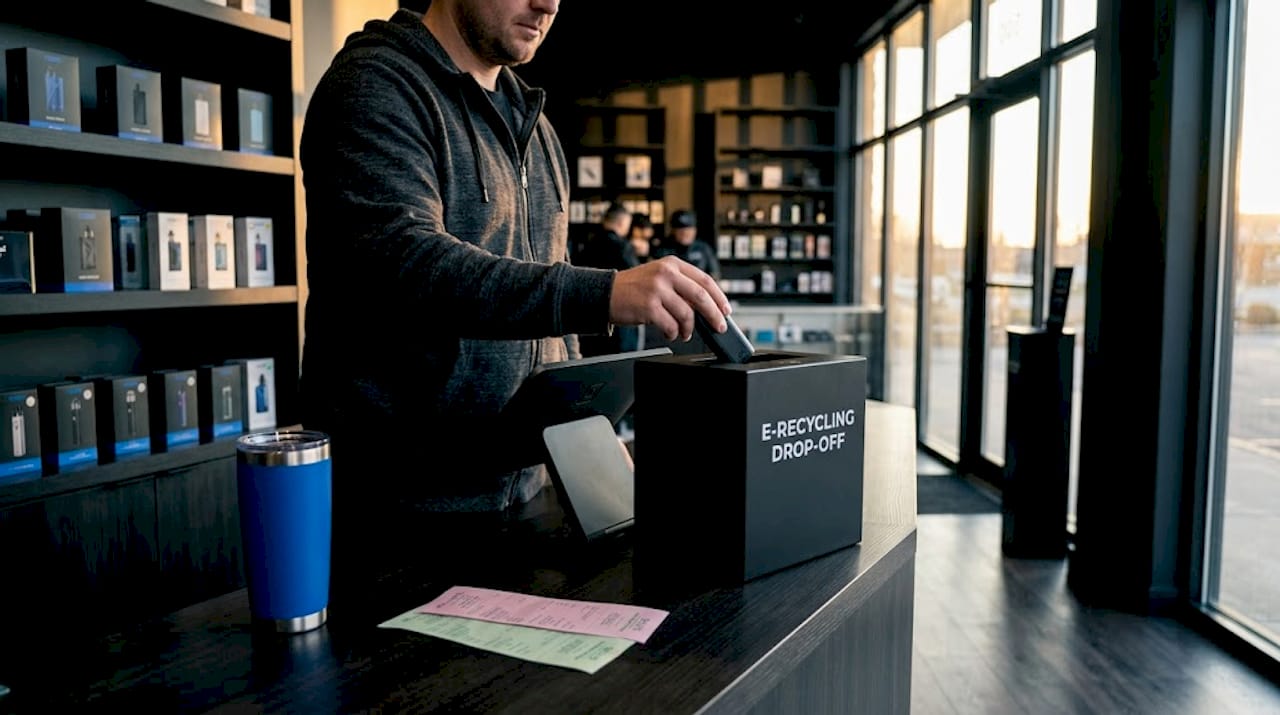
- Drop the device at a dedicated e-waste collection bin, household hazardous waste facility, or a retailer take-back program
- Never place loose batteries or charged devices in curbside recycling
Common mistakes to avoid: throwing vapes loose in your car’s glove box for weeks before disposal, mixing them with regular recyclables, or placing them in bins next to flammable materials. Each of those situations creates real risk.
Pro Tip: Many vape shops now have drop boxes specifically for used devices. Ask your local shop the next time you’re in. It takes thirty seconds and keeps hazardous materials out of landfill.
3. Select eco-conscious vape products and suppliers
Where you buy matters as much as what you buy. Brands that invest in FSC-certified packaging, carbon-offset shipping, or verified take-back schemes have a meaningfully smaller footprint than those that don’t. The difference is not always visible on the product itself, so you have to look at the brand’s stated practices.
When evaluating a brand or retailer, consider:
- Whether they participate in Extended Producer Responsibility programs for vape waste
- Whether their packaging is recyclable or uses minimal plastic
- Whether they offer take-back or recycling drop-off at point of sale
- Whether bulk purchasing options are available to reduce packaging per unit
Buying in bulk reduces per-unit packaging waste significantly. Ordering a single pod at a time versus a multi-pack creates far more packaging waste over the course of a year than most vapers account for. Small habit, real difference.
4. Understand why disposables are a systemic problem
To make genuinely informed choices, it helps to understand the scale of the issue. In Connecticut alone, 12.8 million disposables are discarded annually, generating 1,450 metric tonnes of hazardous waste. That is one state. Multiply that across the country and the numbers become significant fast.
The design of disposables makes the problem worse. Between 17 and 41 percent of a disposable vape’s weight consists of non-removable lithium-ion batteries. You cannot separate the battery from the device, which makes proper recycling nearly impossible through standard channels. The lack of modular design is a structural barrier to any circular economy approach. Understanding this helps explain why switching devices is not just a personal choice. It has real downstream effects on waste infrastructure.
You can explore more about disposable vape mechanics and their environmental context to make a clearer comparison before your next purchase.
5. Build energy-efficient charging habits
Device charging is a smaller but real part of your vaping footprint. The habits around it also directly affect how long your device lasts, which is one of the most effective green vaping techniques available.
- Always charge on a stable, nonflammable surface. Not your couch, not your bed
- Use the cable and adapter that came with your device, or a reputable low-power alternative
- Avoid overcharging. Leaving devices plugged in overnight degrades the battery faster and wastes electricity
- If you have solar panels or another renewable energy source at home, use that outlet for device charging
- Unplug chargers when not in use. Even idle chargers draw small amounts of power continuously
Pro Tip: A battery that has been overcharged repeatedly will lose capacity faster, meaning you will replace your device sooner than necessary. Charge to around 80 percent when possible and unplug.
6. Minimize plastic waste and prevent e-liquid contamination
Vaping without plastic is not entirely achievable yet, but you can dramatically reduce how much single-use plastic your habit generates. Open refillable systems cut plastic use the most because you are refilling one pod repeatedly instead of cycling through sealed prefilled units.
When you do need to dispose of e-liquid bottles or used pods, handle them carefully:
- Seal empty e-liquid bottles before disposal. Nicotine residue left in bottles can leach into soil if bottles crack in landfill
- Store your e-liquids in a sealed, upright container away from heat to prevent accidental leaks
- Choose brands that use glass or recycled plastic bottles where available
- Prefilled pods reduce nicotine contamination risk because you never handle the liquid directly. That is a safety benefit as well as an environmental one, particularly in households with children
The goal is to treat nicotine liquids the same way you would treat any household chemical. Contained, sealed, and disposed of through the right channel.
7. Support brands with take-back and recycling programs
Some vape brands are beginning to take responsibility for end-of-life product management. Industry partnerships with recycling groups have made take-back programs more accessible in recent years. When a brand offers one, using it is the highest-impact thing you can do after making the switch away from disposables.
When a brand does not offer a take-back program, ask why. Consumer demand shapes product decisions. Retailers that hear consistent requests for recycling options are more likely to act on them. Your purchasing behavior and your feedback both matter.
8. Vaping device comparison by environmental impact
Choosing the right device type is one of the most concrete environmentally friendly vape choices you can make. This table compares the three main categories across the factors that matter most:
| Category | Disposable vapes | Prefilled pod systems | Open refillable systems |
|---|---|---|---|
| Weight discarded per session | 30 to 40 grams | 6 to 8 grams | Under 2 grams |
| Battery recyclability | Very low (non-removable) | Moderate | High (replaceable) |
| Nicotine contamination risk | Moderate | Low | Moderate (liquid handling) |
| Cost over 12 months | Highest | Mid-range | Lowest |
| Convenience | High | High | Moderate |
| Long-term device lifespan | 3 to 5 days | Weeks | Years |
The data makes the hierarchy clear. Open refillable systems win on every environmental metric. Prefilled pods are a solid middle ground. Disposables rank last across the board for sustainable vaping practices.
9. Buy from retailers that reward responsible choices
Retailers matter in this equation. A shop that stocks eco-conscious vape products, supports recycling infrastructure, and educates customers on disposal is contributing to better outcomes even if a single customer only buys one product. Where you spend money in this category sends a signal.
Look for retailers that stock refillable systems alongside disposables, offer clear disposal guidance at point of sale, and partner with verified recycling programs. Clouddistrict covers a range of brands with varying sustainability profiles, and you can explore the full brand selection to compare what’s available.
10. Stay informed and keep raising the standard
Sustainable vaping practices are evolving. Regulations around Extended Producer Responsibility are being debated at the state and federal level. New device designs with removable batteries are entering the market. The information landscape is shifting.
Follow news from advocacy groups and environmental organizations that track vape waste policy. When regulations improve, devices will become easier to recycle. In the meantime, you already have the tools to make a real difference with the choices covered in this guide. The most impactful actions are using a refillable device, disposing of batteries through proper channels, and buying from brands that take end-of-life seriously.
My honest take on where sustainable vaping actually stands
I’ve watched the conversation around eco-friendly vaping shift significantly over the past few years. When refillable pod systems first started competing with disposables, the common objection was convenience. They leaked. They were complicated. Casual vapers didn’t want the hassle. That objection is mostly gone now.
What I’ve found is that the real barrier today is inertia. Vapers know disposables are wasteful. Most of the people I talk to already feel some friction about throwing them away. But the step from knowing to changing takes a specific push, usually when someone lays out the numbers concretely or they try a good refillable system for the first time and realize it’s genuinely as easy.
The data on this is not subtle. Refillable systems last years versus days for disposables. The waste difference per session is roughly 80 percent. Those are not marginal improvements. They are category-level differences.
My view is that the industry is moving in the right direction, but consumer choices are outpacing manufacturer responsibility right now. Until take-back programs become standard and device designs include removable batteries, vapers who want to minimize harm have to be proactive. The good news is that the tools are here. The devices exist. The recycling infrastructure, while imperfect, is accessible if you know where to look. You don’t need to wait for the industry to solve this before you can act on it.
— Justin
Find eco-conscious vaping products at Clouddistrict
Clouddistrict carries a curated selection of devices and products suited to vapers who want to vape more responsibly without losing quality or convenience. Whether you’re ready to move to a refillable pod system or you want to explore brands with better sustainability records, the selection is available in one place.

You can browse the full range of products and brands at Clouddistrict to compare options, check for take-back program information, and find deals through the Cloudz rewards system on every qualifying purchase. Responsible choices and a rewarding experience are not mutually exclusive. Start with the device switch. Everything else follows from there.
FAQ
What are the best eco-friendly vaping tips for beginners?
Start by switching from disposable vapes to a refillable or prefilled pod system. This single change reduces discarded material per session by up to 80 percent and cuts your annual carbon footprint significantly.
How should I dispose of a disposable vape safely?
Tape the battery terminals, seal any remaining liquid, and drop the device at an e-waste bin, household hazardous waste facility, or retailer take-back point. Never place vapes in curbside trash or standard recycling.
Are prefilled pods more eco-friendly than disposables?
Yes. Prefilled pods weigh 6 to 8 grams versus 30 to 40 grams for disposables, generating far less waste per session. They also reduce direct nicotine handling, lowering contamination risk compared to open refillable systems.
Does bulk buying actually reduce vaping waste?
Buying multi-packs or larger e-liquid bottles reduces packaging waste per unit. Fewer individual packages ordered over time means less plastic and cardboard in the waste stream across the year.
Can I recycle a vape device at home?
Standard home recycling bins are not designed for lithium batteries or nicotine-contaminated components. Use a certified e-waste drop-off location or a vape retailer with a take-back program to recycle devices correctly.