Smokers Guide to Vaping: Switch Smart in 2026

Smokers Guide to Vaping: Switch Smart in 2026
Vaping is defined as the act of inhaling aerosolized nicotine produced by an electronic device, and it is the most widely used tobacco harm reduction tool available to adult smokers today. A structured smokers guide to vaping matters because 74% of smokers are unaware that vaping is less harmful than cigarettes, meaning most people switch without the knowledge they need to succeed. The right device, the correct nicotine strength, and a basic understanding of technique are the three factors that determine whether a smoker successfully transitions or returns to cigarettes within a week. This guide covers every step, from choosing your first device to vaping responsibly in public.
1. What the smokers guide to vaping actually covers
Vaping is a harm reduction tool designed for adult smokers, not a harmless hobby or a product for non-smokers. That distinction matters before you read anything else. The goal of switching is to move away from combustible tobacco, which produces thousands of toxic byproducts, and toward a delivery method that provides nicotine without burning plant material. 60% of smokers who switch to vaping reduce their cigarette consumption, and 13% quit entirely within six months. Those numbers are meaningful, but they depend on making informed choices from day one.
2. What are the main types of vaping devices?
Device selection is the single most consequential decision a new vaper makes. The wrong device produces a weak, unsatisfying experience that sends most smokers straight back to cigarettes. There are four main categories, each suited to a different type of smoker.
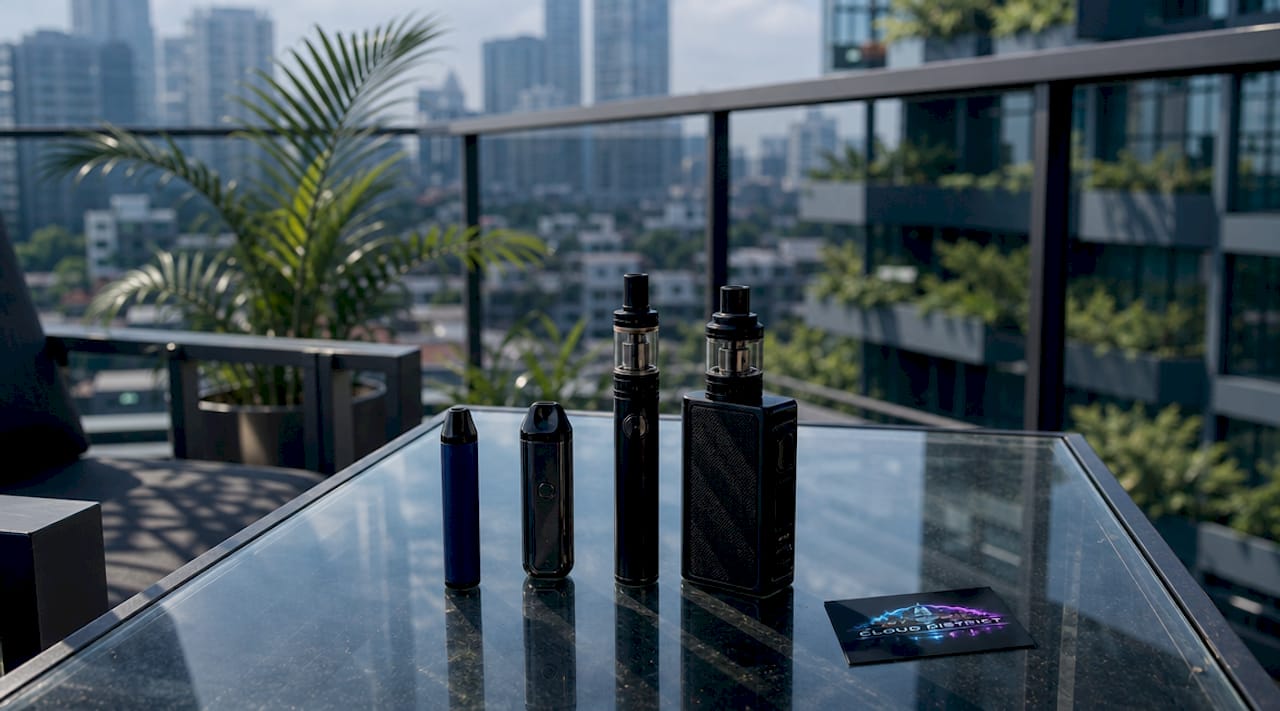
| Device Type | Best For | Ease of Use | Nicotine Delivery | Avg. Cost |
|---|---|---|---|---|
| Disposable | First-time switchers | Very easy | High | $10–$25 |
| Pod system | Daily smokers | Easy | High | $25–$50 + pods |
| Vape pen | Intermediate users | Moderate | Medium | $20–$40 |
| Box mod | Experienced vapers | Complex | Variable | $40–$100+ |
Disposables like Geek Bar are pre-filled, pre-charged, and require zero setup. You open the package and inhale. For a smoker on day one, that simplicity removes every barrier to entry. Cloud District’s disposable vape guide breaks down exactly how these devices work and why they dominate the beginner market.
Pod systems offer a refillable or pre-filled cartridge attached to a rechargeable battery. They deliver consistent nicotine and replicate the tight draw of a cigarette better than most other formats. Devices like the VUE 50K Kit are a strong step up once you know vaping suits you.
Vape pens and box mods are for smokers who want to explore flavor or reduce nicotine over time. They require more maintenance, coil changes, and e-liquid management. They are not the right starting point for most switchers.
Pro Tip: Start with a disposable or pod system for your first two weeks. Once you know what draw style, nicotine level, and flavor profile you prefer, you can invest in a more advanced device with confidence.
3. How to choose the right nicotine strength
Nicotine strength matching is the most overlooked factor in a successful switch. Too high and you get headaches and nausea. Too low and cravings push you back to cigarettes. The right level depends entirely on how much you currently smoke.
Use this as your starting framework:
- Light smokers (under 10 cigarettes/day): 3mg to 6mg freebase nicotine
- Moderate smokers (10–20 cigarettes/day): 12mg to 20mg, or 25mg nicotine salt
- Heavy smokers (20+ cigarettes/day): 35mg to 50mg nicotine salt
The difference between freebase and salt nicotine is not just chemistry. Nicotine salts allow significantly higher nicotine concentrations with a smoother throat hit, making them far more suitable for heavy smokers who need fast satisfaction. Freebase nicotine at high concentrations produces a harsh throat hit that most people find unpleasant. For a deeper look at how nicotine behaves inside disposable devices, Cloud District’s guide on nicotine in disposable vapes is worth reading before you buy.
Flavor choice also affects how satisfying the switch feels. Tobacco and menthol flavors work well for smokers who want the closest sensory match to cigarettes. Fruit and dessert profiles are popular for smokers who want a clean break from the taste of tobacco entirely. Neither approach is wrong. The goal is to find something you reach for instead of a cigarette.
Pro Tip: If you feel dizzy or nauseous after vaping, your nicotine strength is too high. Drop down one level immediately. Discomfort at this stage is a sign of a fixable mismatch, not a reason to stop.
4. Essential vaping techniques for smokers
Most beginners fail by vaping exactly like they smoke. That single mistake causes harsh hits, dry burns, and disappointment. Vaping requires a slower, gentler draw than a cigarette. Where a cigarette rewards a sharp, short puff, a vape device needs a steady 3 to 5 second pull to heat the coil properly and produce a satisfying vapor cloud.
Key technique rules for new vapers:
- Draw slowly and steadily, not sharply
- Hold vapor briefly in your mouth before inhaling (mouth-to-lung technique)
- Avoid chain vaping: wait 20 to 30 seconds between draws
- Prime new coils by waiting 5 minutes after installation before your first puff
- Never vape a device that tastes burnt. Replace the coil or the device immediately
Priming new coils by waiting after installation is one of the most commonly skipped steps. A dry hit from an unprimed coil tastes terrible and can put a new vaper off the device entirely. Battery safety is equally non-negotiable: use the charging cable that came with your device, avoid overnight charging, and store devices away from direct sunlight and heat. For household safety, Cloud District’s guide on childproof vape storage covers how to keep nicotine products away from children.
5. Vaping on flights and in public spaces
Vaping regulations in public and during travel are strict, and ignorance of the rules is not a defense. Vaping devices must be carried in carry-on luggage only, never in checked bags. Lithium batteries in the hold present a fire risk that airlines and regulators take seriously.
Using or charging a vaping device onboard a flight is a federal offense. Fines can reach $4,000. No exceptions apply, regardless of airline or destination. The rule covers both use and charging.
For packing, empty your vape tank before boarding. Cabin pressure forces e-liquid out of tanks, and a leaking device in your carry-on bag damages other items and wastes product. Store the device upright in a sealed bag.
Vaping etiquette checklist for public spaces:
- Never vape indoors unless the venue explicitly permits it
- Step away from building entrances, bus stops, and crowded areas
- Ask before vaping near others, especially children
- Respect no-smoking zones: they apply to vaping in most jurisdictions
- Dispose of used disposables in trash, not on the ground
- Be aware that local laws vary significantly by city and state
Following this vaping etiquette checklist protects you legally and maintains a responsible image for the broader vaping community.
6. Common challenges when switching and how to fix them
Every smoker who switches to vaping hits at least one obstacle. Knowing what those obstacles are in advance makes them far easier to manage.
| Challenge | Fix |
|---|---|
| Nicotine too low, cravings return | Increase nicotine strength by one level |
| Nicotine too high, nausea or headache | Drop to a lower concentration immediately |
| Vape tastes burnt | Replace coil or switch to a new disposable |
| Still smoking alongside vaping | Set a target date to stop cigarettes; use vaping as the replacement, not a supplement |
| Flavor feels wrong | Try tobacco or menthol first, then experiment with fruit profiles |
| Device feels unsatisfying | Switch from a box mod to a pod system for tighter draw |
Dual use, meaning smoking and vaping simultaneously, is common in the first few weeks. It is not a failure. The goal is to gradually shift the ratio until cigarettes are no longer part of the routine. Most successful switchers report that finding the right flavor and nicotine combination was the turning point. Treat the first two weeks as a calibration period, not a test of willpower. Cloud District’s beginner vape guide covers device selection in detail for smokers at exactly this stage.
Key takeaways
Switching from smoking to vaping succeeds when you match your device, nicotine strength, and technique to your actual smoking habits from day one.
| Point | Details |
|---|---|
| Start with the right device | Disposables and pod systems give smokers the easiest, most satisfying entry point. |
| Match nicotine precisely | Heavy smokers need 35mg to 50mg nicotine salt; light smokers need 3mg to 6mg freebase. |
| Fix your technique first | Slow, steady draws prevent dry hits and deliver consistent nicotine satisfaction. |
| Know the travel rules | Carry vapes in hand luggage only; using or charging on flights carries federal fines. |
| Treat dual use as a phase | Smoking and vaping simultaneously is normal early on; set a clear date to stop cigarettes. |
What I’ve learned watching smokers switch to vaping
The smokers who succeed at switching are not the ones with the most willpower. They are the ones who treated the first week as a setup problem, not a discipline problem. Every time I see someone give up on vaping and go back to cigarettes, the reason is almost always the same: they grabbed the cheapest disposable on the shelf, found it unsatisfying, and concluded that vaping does not work for them. It does work. They just had the wrong device or the wrong nicotine level.
The advice I give consistently is this: buy two or three different nicotine strengths in the same flavor and test them back to back over a few days. The one that stops you from reaching for a cigarette is your level. That single experiment saves most people weeks of frustration.
One thing I want to be direct about: vaping is for adult smokers who are trying to move away from cigarettes. It is not a recreational product for non-smokers, and it is not harmless. The harm reduction argument is real and supported by evidence, but it only applies when the alternative is continued smoking. If you are not a smoker, there is no case for starting.
The community aspect of vaping is genuinely useful. Online forums, local vape shops, and resources like the Cloud District blog give new vapers access to real-world experience that no product label provides. Use those resources. The learning curve is short, but it is real.
— Justin
Find your first vape at Cloud District
Cloud District stocks the devices and nicotine options that match every profile in this guide, from beginner disposables to rechargeable pod systems.

For smokers making the switch, Geek Bar products are the most reliable starting point: pre-filled, pre-charged, and available in nicotine strengths suited to both light and heavy smokers. If you want a fruit-forward option with consistent vapor production, the Pulse Strawberry Kiwi is a strong first choice. Cloud District’s rewards program, Cloudz, earns you points on every purchase, making it practical to experiment with flavors and find your preferred setup without overspending.
FAQ
What is the best vaping device for a first-time smoker?
Disposable devices like Geek Bar are the best starting point for smokers new to vaping. They require no setup, deliver consistent nicotine, and replicate the draw of a cigarette closely enough to satisfy cravings from day one.
How do I know what nicotine strength to use?
Match your nicotine level to how many cigarettes you smoke daily. Heavy smokers (20+ per day) should start with 35mg to 50mg nicotine salt; moderate smokers do well at 20mg to 25mg; light smokers can start at 3mg to 6mg freebase.
Can I vape on a plane?
No. Using or charging a vaping device on a flight is a federal offense and carries fines up to $4,000. Devices must be packed in carry-on luggage only, with tanks emptied before boarding to prevent leaks from cabin pressure.
Is vaping actually less harmful than smoking?
Vaping is widely recognized as a harm reduction tool compared to combustible cigarettes, which produce thousands of toxic byproducts through burning. It is not harmless, but for adult smokers who cannot quit nicotine, it represents a significantly lower-risk alternative.
Why does my vape taste burnt?
A burnt taste means the coil is dry or worn out. On a refillable device, replace the coil and wait five minutes before vaping again. On a disposable, the device is finished and needs to be replaced.