Why Vape Flavor Matters for Smokers Quitting in 2026

Why Vape Flavor Matters for Smokers Quitting in 2026
Vape flavor is the single most underestimated factor in whether a smoker successfully quits. Most cessation discussions focus on nicotine strength or device type, but the sensory experience of flavor is what keeps users committed to vaping instead of returning to cigarettes. The role of flavor in vaping goes far beyond taste preference. It shapes satisfaction, prevents relapse, and directly influences long-term behavior change. This article breaks down the science, the psychology, and the practical decisions that make flavor choice a genuine health tool for adult vapers.
Why vape flavor matters for smoking cessation success
Flavor is not a cosmetic feature of vaping. It is a functional driver of quit success. Approximately 30% of adult users cite flavor availability as the specific reason they started vaping. That number alone tells you flavor is not a secondary consideration for people switching from cigarettes.
The cessation data is even more direct. Adults using non-tobacco flavored e-cigarettes are more than twice as likely to successfully quit smoking compared to those using tobacco-only flavors. That finding comes from a 2020 JAMA Network Open study. The implication is significant: choosing a fruit, menthol, or dessert flavor is not just a preference. It is a strategy.
The reason behind this comes down to sensory dissociation. When vaping tastes nothing like a cigarette, your brain stops associating the act with smoking. That separation is protective. It reduces the cue-based cravings that trigger relapse. Flavor acts as a behavioral tool that makes vaping feel like an upgrade rather than a substitute.
- Non-tobacco flavors create sensory distance from cigarette cues
- Flavor variety sustains motivation during the early weeks of quitting
- Familiar, enjoyable flavors reduce the psychological cost of switching
- Tobacco flavors can reinforce smoking associations and increase relapse risk
What is the role of flavor in vaping satisfaction and adherence?
Satisfaction is what keeps a vaper vaping. Without it, the default behavior, which is reaching for a cigarette, returns quickly. Flavor variety is the primary driver of that satisfaction over time.
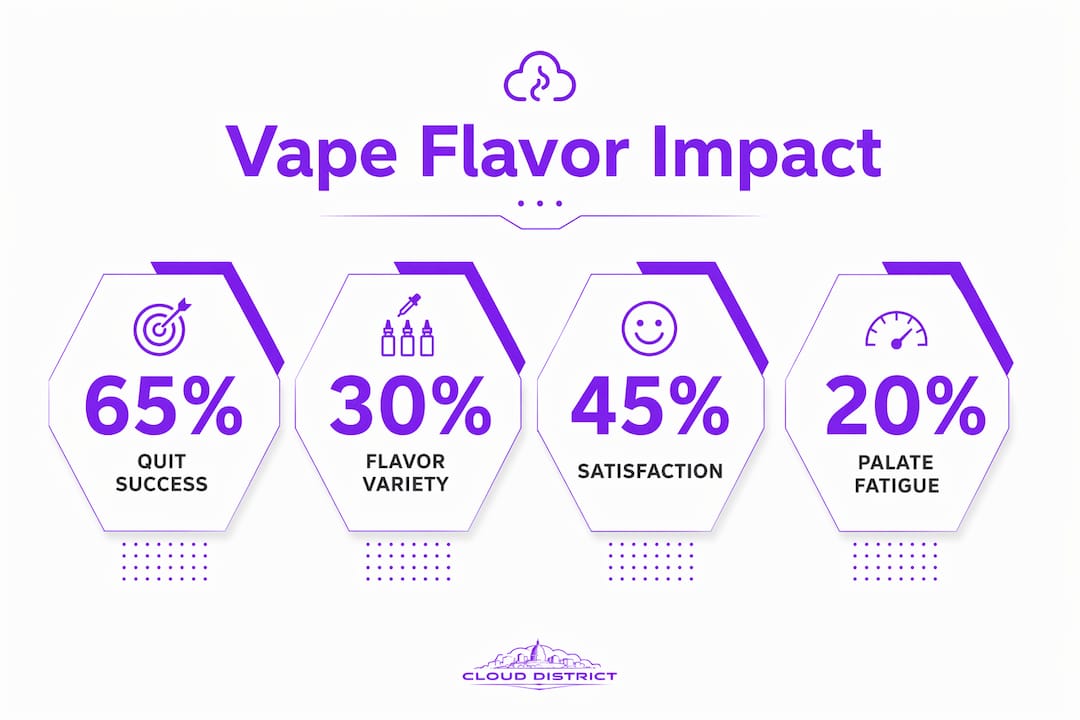
Palate fatigue is a real and underreported problem. When you vape the same flavor every day, your taste receptors adapt and the experience dulls. This is sometimes called “vape tongue,” a condition where familiar flavors become flat or undetectable. Flavor rotation resets taste perception and restores the sensory reward that keeps vaping satisfying. Rotating between flavor categories every few weeks is one of the most practical steps a vaper can take.
Flavor also has a measurable psychological dimension. Different flavor profiles influence mood and the perceived quality of the vaping session. Menthol and mint flavors are associated with alertness and a clean sensation. Dessert and fruit profiles tend to feel more relaxing and rewarding. Tobacco flavors serve users who want familiarity without the combustion. Understanding your own preferences across these categories is how you build a vaping routine that holds.
The four major flavor categories each serve a different user need:
- Fruit flavors (strawberry, mango, watermelon): high appeal for new vapers transitioning from cigarettes; strong sensory contrast with tobacco
- Dessert and bakery flavors (vanilla custard, caramel, pastry): slower, more complex profiles suited to longer sessions
- Menthol and mint flavors: sharp, clean sensation; popular among former menthol cigarette smokers
- Tobacco flavors: familiar base for smokers who want minimal sensory disruption during early transition
Flavor also affects what vapers call “mouthfeel,” the physical sensation of vapor on the palate and throat. A well-formulated e-liquid with the right flavor profile delivers a satisfying draw that mimics the tactile experience of smoking without the combustion byproducts.
Pro Tip: If you notice your favorite flavor tasting flat or faint, take a two-day break from it and switch to a menthol or citrus profile. The contrast resets your palate faster than any other method.
Does vape flavor affect nicotine dependence and health risks?
The most persistent misconception about vaping is that flavors increase nicotine addiction. The science does not support this. A review of over 230 peer-reviewed studies found no increased nicotine dependence from non-tobacco flavored vape products. Nicotine is the primary addiction driver. Flavor is a delivery context, not an addiction amplifier.
Public health experts are direct on this point: flavor attractiveness should not be conflated with abuse potential. The nicotine level in the e-liquid determines dependence risk, not the flavor profile. This distinction matters because flavor restrictions based on addiction concerns are not supported by the available evidence.
That said, health considerations around flavoring chemicals are real and worth understanding. Some e-liquids use volatile organic compounds in their flavoring formulations. The safety profile of inhaled flavorings differs from the safety profile of the same compounds consumed orally. This is why product quality and regulatory compliance matter when selecting a vape liquid.
| Factor | Risk level | Notes |
|---|---|---|
| Nicotine concentration | Primary risk | Drives dependence regardless of flavor |
| Flavor type (fruit, menthol) | Low risk | No evidence of increased dependence |
| Unregulated flavoring chemicals | Moderate concern | Varies by manufacturer and formulation |
| Regulated, quality-tested e-liquids | Lowest risk | Consistent formulation reduces exposure variance |
“Flavor facilitates the adult smoker’s switch to vaping without increasing dependence risk. The evidence consistently points to nicotine level, not flavor, as the key variable in addiction.”
Choosing products from reputable, regulated manufacturers is the most direct way to reduce exposure to unknown flavoring compounds. Quality control in e-liquid production is not uniform across the market. Brands that publish ingredient transparency and comply with FDA standards give you a clearer picture of what you are inhaling.
How do vaping devices and nicotine types influence flavor perception?
The device you use shapes how flavor registers as much as the e-liquid itself. Device wattage and airflow settings significantly affect flavor perception. Running a device at excessive wattage burns the e-liquid before it fully vaporizes, producing a harsh, muted, or acrid taste. Lower wattage preserves delicate flavor notes and delivers a cleaner profile.
Nicotine form is the second major variable. Nicotine salts provide a smoother throat hit that allows flavors to register more clearly. Freebase nicotine, the traditional form used in most e-liquids, produces a sharper throat sensation at higher concentrations. That harshness can mask subtle flavor notes, particularly in fruit and dessert profiles. If you are not tasting the full flavor of your e-liquid, switching to a nicotine salt formulation is often the fix. For a deeper look at how nicotine behaves in disposable devices, the Cloud District guide on nicotine in disposable vapes covers the mechanics clearly.
Follow these steps to get the best flavor from your setup:
- Start at the lowest recommended wattage for your device and increase gradually until flavor peaks without harshness
- Check airflow settings before adjusting wattage. Restricted airflow concentrates flavor; open airflow dilutes it
- Match nicotine type to flavor complexity. Nicotine salts work best with fruit and dessert profiles; freebase suits tobacco and menthol
- Replace coils or pods on schedule. A worn coil degrades flavor faster than any other single factor
- Rotate flavors every 1–2 weeks to prevent palate fatigue and maintain full flavor perception
Pro Tip: Store e-liquids away from direct light and heat. UV exposure and temperature changes degrade flavoring compounds and reduce the quality of the taste over time.
Practical guidelines for choosing and enjoying vape flavors
Choosing a vape flavor is not a trivial decision, especially for someone using vaping as a smoking cessation tool. The wrong starting point can make the experience feel unrewarding and push you back toward cigarettes. The right starting point builds a habit that holds.
For smokers in the early stages of transitioning, menthol and tobacco flavors offer the lowest sensory barrier. They are familiar enough to feel comfortable while still delivering the nicotine hit that reduces withdrawal. Once the transition is stable, typically after two to four weeks, experimenting with fruit and dessert profiles creates the sensory distance from cigarettes that supports long-term abstinence.
Experienced vapers benefit from a different approach. Flavor rotation across categories keeps the experience fresh and prevents the palate fatigue that leads to dissatisfaction. Pairing a morning session with a sharp citrus or mint profile and an evening session with a warmer dessert flavor is a practical way to maintain variety without constant product switching.
- Start with menthol or tobacco flavors if you are within the first month of quitting
- Move toward fruit profiles after your transition stabilizes to increase sensory distance from cigarettes
- Rotate between at least two flavor categories to prevent palate fatigue
- Match your device type to the flavor. Pod systems with nicotine salts suit fruit and dessert profiles; open systems with freebase nicotine suit tobacco and menthol
- Buy from regulated, quality-controlled brands to get consistent flavor delivery across batches
For a structured overview of device selection alongside flavor compatibility, the Cloud District beginner’s vape guide is a practical starting point.
Key takeaways
Vape flavor is a proven behavioral tool that directly increases smoking cessation success rates and sustains long-term vaping satisfaction when chosen and managed correctly.
| Point | Details |
|---|---|
| Flavor drives quit success | Non-tobacco flavors more than double the likelihood of quitting cigarettes compared to tobacco-only options. |
| Sensory dissociation protects against relapse | Flavors that contrast with cigarette taste reduce cue-based cravings and lower relapse risk. |
| Flavor does not increase nicotine dependence | A review of 230+ studies confirms nicotine level, not flavor, is the primary addiction driver. |
| Device settings shape flavor quality | Wattage, airflow, and nicotine form all affect how accurately a flavor profile is perceived. |
| Flavor rotation prevents palate fatigue | Switching between flavor categories every one to two weeks maintains full taste perception and satisfaction. |
Flavor bans get the science backwards
I have watched the regulatory conversation around vape flavors for years, and the pattern frustrates me. Every time a flavor restriction gets proposed, it is framed as a youth protection measure. But the evidence consistently shows that youth initiation is driven by curiosity and peer influence, not flavor availability. The adults who need flavored products most, the ones using them to stay off cigarettes, are the ones who lose access.
The practical consequence of flavor bans is not abstinence. It is a return to smoking or a shift to unregulated black market products with no quality control. Neither outcome is better than a regulated fruit-flavored vape. The harm reduction math is not complicated.
What I tell anyone using vaping to quit smoking is this: finding a flavor you genuinely look forward to is not a luxury. It is the mechanism. The research on cessation success is built on that sensory reward. Treat flavor selection as seriously as you treat nicotine strength. Experiment with categories. Rotate regularly. Buy from brands that publish their formulations. The vapers who succeed long-term are almost always the ones who found a flavor that made the switch feel worth it, not a compromise.
— Justin
Find your flavor at Cloud District

Cloud District carries a curated selection of high-quality flavored vape products built for consistent performance and real flavor satisfaction. The Pulse Strawberry Kiwi Thermal Edition is one of the most popular options on the platform, delivering a clean fruit profile with reliable vapor production across every session. For pod users, the Nera Fullview 70K POD in Scary Berry offers a bold berry profile in a compact, easy-to-use format. Every purchase earns Cloudz rewards points, and the platform is built for fast local pickup so you spend less time waiting and more time finding the flavor that works for you.
FAQ
Why does vape flavor matter for quitting smoking?
Flavor creates sensory distance from cigarettes, which reduces cue-based cravings and lowers relapse risk. Adults using non-tobacco flavors are more than twice as likely to quit successfully compared to tobacco-flavor users.
Do vape flavors increase nicotine addiction?
No. A review of over 230 peer-reviewed studies found no increased nicotine dependence from flavored vape products. Nicotine concentration, not flavor, is the primary driver of dependence.
What vape flavor is best for someone just quitting smoking?
Menthol and tobacco flavors are the best starting point because they are familiar and reduce the sensory adjustment required. Transitioning to fruit or dessert profiles after the first few weeks helps create distance from cigarette associations.
What is “vape tongue” and how do you fix it?
Vape tongue is palate fatigue caused by vaping the same flavor repeatedly until it tastes flat or faint. Switching to a contrasting flavor category for two to three days resets taste perception and restores full flavor experience.
Does device wattage affect how vape flavor tastes?
Yes. Excessive wattage burns e-liquid before it fully vaporizes, producing a harsh or muted flavor. Starting at the lowest recommended wattage and adjusting upward until flavor peaks without harshness gives the clearest taste profile.